Heat desk · chart page
Is air conditioning worth it in the UK?
Is air conditioning worth it in the UK? For most homes not yet: about 2–3% have any cooling, but the Met Office puts the chance of a 2018-like summer at 50–60% by mid-century.
By the Cooler Indoors desk · figures checked · 4 charts · sources · methods
Is air conditioning worth it in the UK? For most households the honest answer today is "not yet, but the case is growing". Only about 2–3% of UK homes have any form of cooling, while the Met Office expects hot summers like 2018 to become roughly a coin toss by the middle of the century.
Source: Met Office, UKCP18 Headline Findings (v4, August 2022) · checked 29 October 2026
How we read this Each bar is the Met Office's stated range for the chance of a summer as hot as 2018 in any given year. They are projections from climate models, not forecasts for a particular summer.
Show the numbers
| Label | Low | High | Note |
|---|---|---|---|
| Chance now | 12% | 25% | |
| Chance by mid-century | 50% | 60% | Around half of summers |
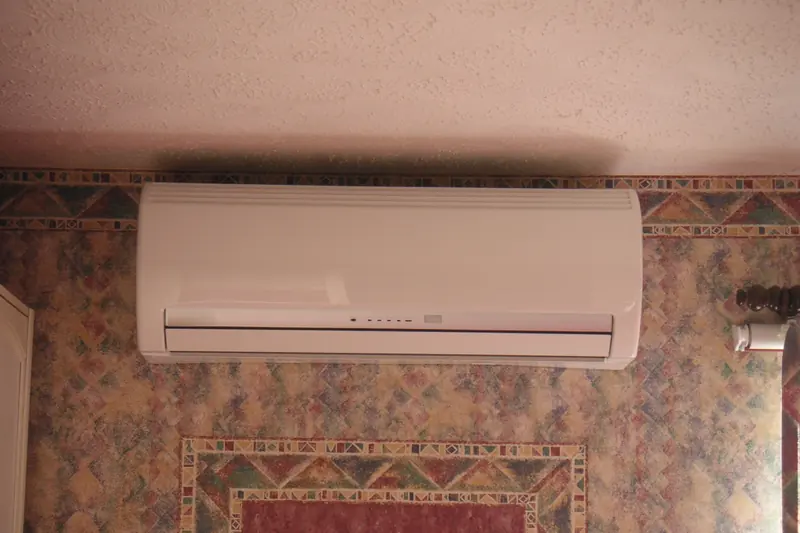
How many UK homes have air conditioning?
Very few. A 2026 DESNZ study of the cooling market puts the share of UK homes with any cooling at roughly 2–3% in 2024, mostly portable units rather than fixed systems. Older estimates were higher: the 2021 BEIS study, Cooling in the UK, cited about 5%. That says more about method than about people ripping out air conditioners.
Source: BEIS, Cooling in the UK (2021), and DESNZ space cooling market update (2026) · checked 29 October 2026
How we read this Figures from different studies and methods; the drop to 2–3% is not evidence that cooling fell. The 2013–2020 values are those cited in the 2021 BEIS study; the 2024 range is from the 2026 DESNZ report.
Show the numbers
| Label | Low | High | Note |
|---|---|---|---|
| 2013 estimate | 3% | 3% | |
| 2015 estimate | 4% | 4% | |
| BSRIA, 2017 and 2020 | 5% | 5% | |
| DESNZ, 2024 | 2% | 3% | Latest estimate |
Fixed systems are rarer still. The DESNZ report puts the installed base of single-split systems in homes at around 64,000 in 2024, with around 9,000 sold that year.
Source: DESNZ (LCP Delta), UK space cooling market landscape update · checked 29 October 2026
How we read this Approximate installed base in homes in 2024, as given (with "~") in Table 2 of the report. Portable units are outside this table, which is why it is so much smaller than the 2–3% of homes figure.
Show the numbers
| Label | units | Note |
|---|---|---|
| Single-split | 64,000 | Most common |
| VRF | 15,000 | |
| Multi-split | 7,000 |
Will the UK get hot enough to need air conditioning?
More summers will test homes that were built to keep heat in. The Met Office's UKCP18 climate projections put the chance of a summer as hot as 2018 at 12–25% already, rising to around 50–60% by mid-century. By 2070, under high emissions, average summer temperatures rise by 1.3°C to 5.1°C.
On video: A heatwave in the summer of 2056 - Met Office future forecast UK
“A heatwave in the summer of 2056 - Met Office future forecast UK”, a video from the Met Office - UK Weather channel on YouTube. A Met Office mock forecast for a 2050s heatwave (nine days of 40C+) built from its climate projections, with context on how much hotter typical and extreme 2050s summers could be. It is their video, not ours, and it loads from YouTube only when you press play.
Source: Met Office, UKCP18 Headline Findings (v4, August 2022) · checked 29 October 2026
How we read this Projected warming under a high-emissions scenario: the summer figure is the 10%–90% probability range from UKCP18; the hot-day figure is from the 2.2 km local projections. Lower emissions would mean smaller rises.
Show the numbers
| Label | Low | High | Note |
|---|---|---|---|
| Summer average, by 2070 | 1.3° | 5.1° | |
| Hot summer days, by the 2070s | 3.8° | 6.8° | Biggest rise |
For the history behind these projections, including the 40.3°C record, see how hot UK summers have been since 1884.
Who gains most from cooling at home?
The case is strongest where heat is a health risk or a room cannot be cooled any other way. UKHSA's heat death estimates show the highest rates in people aged 85 and over, and the English Housing Survey found 12% of English homes reported overheating in 2024. A top-floor flat with windows on one side, a bedroom over a busy road where windows stay shut at night, or a household caring for someone frail are the clearest cases.
For many other homes, the Climate Change Committee's housing report sets the order of play: passive cooling first, then active measures such as air conditioning. Shading, night ventilation and fans below 35°C cost little; our no-AC cooling page sets them out.
Is air conditioning worth it if it also heats the home?
That changes the sums. A reversible split unit is an air-to-air heat pump, so the same kit can heat in winter and cool in summer. Since 28 April 2026 the Boiler Upgrade Scheme in England and Wales has included a £2,500 grant for air-to-air heat pumps in homes. There is a catch. Payment goes through an installer holding MCS certification, and as of September 2026 MCS was still setting up certification for air-to-air. The BUS statistics to September 2026 show 157 air-to-air applications and no vouchers issued. Under MCS, such a system must also cover all of the home's heating. Details are on the air-to-air grant page.
| Question | Figure | Source |
|---|---|---|
| Homes with any cooling | About 2–3% (2024) | DESNZ, 2026 |
| Homes reporting overheating (England) | 12% in 2024 | English Housing Survey |
| Chance of a 2018-like summer | 12–25% now; 50–60% by mid-century | Met Office UKCP18 |
| BUS grant for air-to-air heat pumps | £2,500, homes only; MCS catch applies | GOV.UK, MCS |
| VAT on installed fixed units | 0% until 31 March 2027 where HMRC treats them as air source heat pumps | HMRC Notice 708/6 |
| Electricity price cap, Oct–Dec 2026 | 26.32p per kWh | Ofgem |
What does air conditioning cost to run and install?
Running costs depend on the unit's efficiency and how many hours it runs. With electricity capped at 26.32p per kWh from 1 October to 31 December 2026, each kWh a unit draws costs that much; the Fujitsu ASEH09KNCA, for example, declares 118 kWh a year for cooling on its label test. Worked figures are on the running-cost page.
Install prices are harder. Government statistics do not yet hold air-to-air cost data, so we do not quote one. On tax, HMRC treats many fixed AC units as heat pumps, so one installed in a home can carry no VAT until 31 March 2027; a portable pays the standard 20%. See VAT on air conditioning.
What rules apply before buying?
Planning, wiring and refrigerant rules all apply to fixed units. In England, a heat-and-cool unit can be permitted development, but a cooling-only unit cannot, so check with the local planning authority first; the planning page has the detail. A split system must be installed by an F-gas certified engineer, and any new circuit by a registered electrician.
Questions this data raises
Is a portable air conditioner worth it in the UK?
It can cool one room for a few hot weeks, but single-hose portables pull warm outside air back in through gaps, so they cool less than the box suggests. They also pay 20% VAT, unlike an installed fixed heat pump unit.
Do most UK homes need air conditioning?
Not on current evidence. About 2–3% of homes have any cooling, and passive steps work for many. The case is strongest for homes that overheat badly or house people most at risk from heat.
Does air conditioning add value to a UK home?
We found no primary data on this, so we do not put a figure on it. What is measurable is that a reversible unit can also heat the home, and may qualify for a grant once MCS certification for air-to-air is available.
How likely is another summer like 2018?
The Met Office's UKCP18 projections give a 12–25% chance in any year already, rising to about 50–60% by mid-century.
Sources for this page
- Met Office, UKCP18 Headline Findings (v4, August 2022) metoffice.gov.uk
- DESNZ study of the cooling market assets.publishing.service.gov.uk
- 2021 BEIS study, Cooling in the UK assets.publishing.service.gov.uk
- UKCP18 climate projections metoffice.gov.uk
- Climate Change Committee's housing report theccc.org.uk
- BUS statistics to September 2026 gov.uk
All checked 29 October 2026. How we choose and read sources: Methods & sources.